Wardogs Season 2 Update in 2026 Brings Major Logistics, Vehicle and Economy Changes
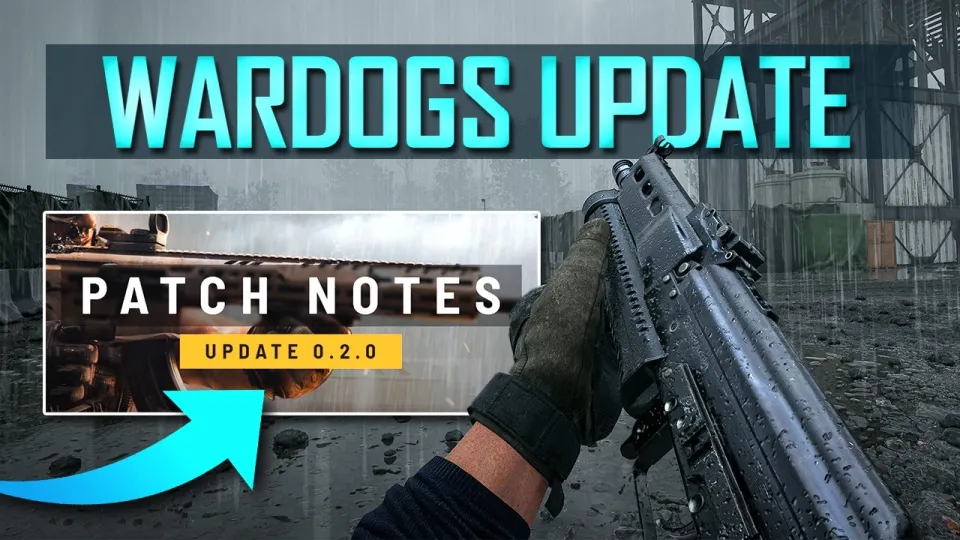
Video: WARDOGS New Season 2 Update ► EVERYTHING You Need To Know
Need articles like this for your video? They help promote it on YouTube and Google — order them in the Telegram bot @sat_sit_bot. The bot writes and publishes the articles itself (with your YouTube video embedded) on popular topical websites (no ads). Your first 50 articles are free.
· based on the channel GhostGaming
Key takeaways
- Wardogs Season 2 (update 0.2) reworks logistics payouts, FOB building costs and vehicle economy.
- A supply pallet delivered at a 10-streak now pays $1,250 base plus a $2,500 bonus.
- Helicopter pilots face higher airframe costs, pricier flares and reduced earnings on landing.
- A new anti-air vehicle, the Gepard, plus the Browning turret, make low-flying runs riskier.
- The .50 cal damage was cut by 16%, letting Tier 2 armor survive end-game sniper rounds to the body.
The Wardogs Season 2 update, deployed as update 0.2, is a broad rebalance of the game's economy rather than a content drop: logistics deliveries, FOB construction, helicopter costs and anti-air options all change at once. The headline numbers are the logistics payouts, where a pallet delivered at a 10-streak now pays $1,250 base plus a $2,500 bonus, and the FOB nerfs that make every wall and emplacement more expensive in supplies. GhostGaming's full breakdown of the patch is the fastest way to see how the numbers land in a live match, and the channel's Twitch stream is where the changes get tested round after round.
What changed in the Wardogs Season 2 update at a glance
Season 2 touches almost every way a player earns money and spends it. The changes fall into four buckets:
- Logistics payouts — supply drop-offs now scale with your delivery streak, with a pallet at a 10-streak worth $1,250 base plus a $2,500 bonus.
- FOB construction — walls, emplacements and the supply needed to keep a forward operating base alive cost more, and the reward for building drops.
- Air economy — helicopter airframes, flares and loadouts cost more, and landing payouts are reduced.
- Anti-air and weapons — a new anti-air vehicle joins the roster, the Browning turret becomes a real threat to low flyers, and the .50 cal takes a 16% damage cut.
The pattern is consistent: infantry play is largely untouched or improved, while support roles and pilots have to work harder for the same money.
Logistics payouts and the supply streak bonus
The logistics rework is the most consequential part of the patch, because it changes whether driving a truck is worth an hour of your time. Deliveries now pay a base amount plus a streak bonus, so a pallet dropped at a 10-streak comes out to $1,250 base and a $2,500 bonus. Numbers shown early in the patch notes were calculated outside the combat zone, and the developers later updated them, so the in-zone figures are the ones that matter.
The catch is volume. A single short run no longer beats a firefight on money per minute, and the URAL in particular earns less per trip than the smaller trucks. Players who want logistics income now have to chain deliveries without dying, which turns the role into a route-planning exercise: pick a safe loop, keep the streak alive, and only spawn a URAL when a FOB is genuinely about to run dry. The complaint that logistics was already an unpopular job is fair, but the new bonus structure at least gives a dedicated driver a path to six-figure matches on a single life.
FOB building costs and what it means for base builders
FOB construction absorbed some of the hardest nerfs in the update. Every part of a forward base — walls, emplacements, the supply that keeps ammo flowing — costs more relative to what a builder earns for putting it up. In practice, a base that used to go up with a handful of pallets now needs several times the supply for a comparable layout.
That has two knock-on effects. First, builders need more deliveries per FOB, which pushes them back toward logistics even if they would rather fight. Second, a FOB that is not continuously resupplied will fall faster, because the supply buffer per structure is thinner. The practical advice for Season 2 is to build fewer, tighter bases with overlapping fields of fire instead of sprawling walls, and to keep at least one dedicated driver assigned to each active FOB rather than spawning a truck reactively.
Helicopter economy, flares and the new anti-air threat
Pilots took a double hit: costs went up and earnings went down. A fully loaded minigun Little Bird with three flares runs around $14,000, and with pricier flares and reduced landing payouts, a single mistake can wipe out thousands in value. The minigun variant was already rare in Season 1, which makes the price increase feel harsh for the few players who used it.
The air picture is also more dangerous. The Gepard, a new anti-air vehicle, gives ground crews a dedicated platform for contesting helicopters, and the Browning turret is now a credible deterrent against low passes. The counterweight is that anti-air options were adjusted at the same time, so early in the season a pilot who avoids flare waste and keeps altitude discipline can still survive. Flying in Season 2 is a skill check rather than a money printer: budget your loadout, treat flares as a finite resource, and avoid hovering over any position that has had time to set up a turret.
Weapon and armor changes including the .50 cal nerf
The .50 cal damage reduction of 16% is the change infantry will feel most directly. The practical consequence is that Tier 2 armor can now survive a body shot from the end-game sniper rifle, so the sniper zones that used to guarantee a kill on the torso no longer do. Head and neck hitboxes remain lethal, which pushes sniper play toward precision rather than center-mass volume.
Other weapon tweaks are smaller but worth noting: the SKS Bipod moved from $800 to $810, a change so minor it reads as housekeeping. What the patch does not fix, according to long-running player requests, is the variable zoom scope keybind issue, and low-zoom, uncluttered optics remain locked behind late progression levels — a design choice that continues to frustrate players who just want a simple red dot early.
Common questions from the Wardogs community
The community reaction to Season 2 centers on a few recurring worries. The biggest is that logistics and FOB building, already the least popular jobs, become obsolete if they are not lucrative enough — near the end of Season 1, few players were running supply or building bases, and the new costs risk accelerating that trend. The counter-argument is that infantry income is now the most reliable path, which brings the economy closer to a shooter-first game.
A second worry is progression speed. Driver and pilot levels are no slower to earn in raw XP terms, but the reduced payouts mean the money side of those roles lags behind. Third, pilots who already struggled to recoup a $14,000 minigun helicopter now face the Gepard and the Browning turret as well. The honest read is that Season 2 rewards players who specialize and plan routes over players who improvise, and that a follow-up balance patch is likely if logistics participation collapses.
All links from the GhostGaming breakdown
- Full patch notes: https://store.steampowered.com/news/app/1867240/view/670630562731396445
- Twitch: http://www.twitch.tv/ghostgaminggg
- Twitter: https://twitter.com/GhostGamingG
- Discord: https://discord.gg/MzkAVCy
- TikTok: https://www.tiktok.com/@ghostgaming_battlefield
Final verdict on the Wardogs Season 2 update
Season 2 is an economy patch with a clear direction: make infantry the dependable earner and force support roles to be deliberate. The streak-based logistics bonus and the higher FOB costs together mean that a coordinated team with one committed driver will out-build and out-supply a disorganized one, while lone pilots and casual builders will feel poorer. The .50 cal nerf and the Gepard change how snipers and helicopters approach every engagement, and both will take a few weeks to settle. For a round-by-round look at how these numbers play out, follow GhostGaming, whose patch breakdown covers every change in the update, and catch the live testing on Twitch.
Source: WARDOGS New Season 2 Update ► EVERYTHING You Need To Know · Markdown version
Questions & answers
How much does a logistics delivery pay in Wardogs Season 2?
Payouts scale with your delivery streak. A pallet dropped at a 10-streak pays $1,250 base plus a $2,500 bonus. Early figures in the patch notes were calculated outside the combat zone and were later corrected, so check the updated in-zone numbers before planning routes.
Why do players say logistics and FOB building are worse in Season 2?
FOB structures cost more supply and builders earn less relative to the effort, so a base that used to need a few pallets now needs several times the supply. Since logistics was already an unpopular role, the fear is that fewer players will drive trucks and bases will fall faster.
Can Tier 2 armor survive a sniper shot after the .50 cal nerf?
Yes. The 16% reduction in .50 cal damage means Tier 2 armor can now take a body shot from the end-game sniper rifle. Head and neck hits remain lethal, so snipers have to aim for precision rather than center mass.
Is flying a helicopter still profitable in Wardogs Season 2?
It is much tighter. A fully loaded minigun Little Bird with three flares costs around $14,000, flares are pricier, landing payouts are lower, and the new Gepard anti-air vehicle plus the Browning turret punish low passes. Pilots need to conserve flares and avoid hovering over prepared positions to stay in the black.